

Laurels – Fall 2026
Each quarter, we celebrate Virginia Master Naturalist volunteer accomplishments in the Laurels post. Thank you to everyone who took the time to write up these terrific stories. They offer insights into the many ways that VMN volunteers make a difference in their communities.
Middle Peninsula Chapter Trainee Finds New Rare Plant
Contributed by Susan Walton, VMN Middle Peninsula Chapter
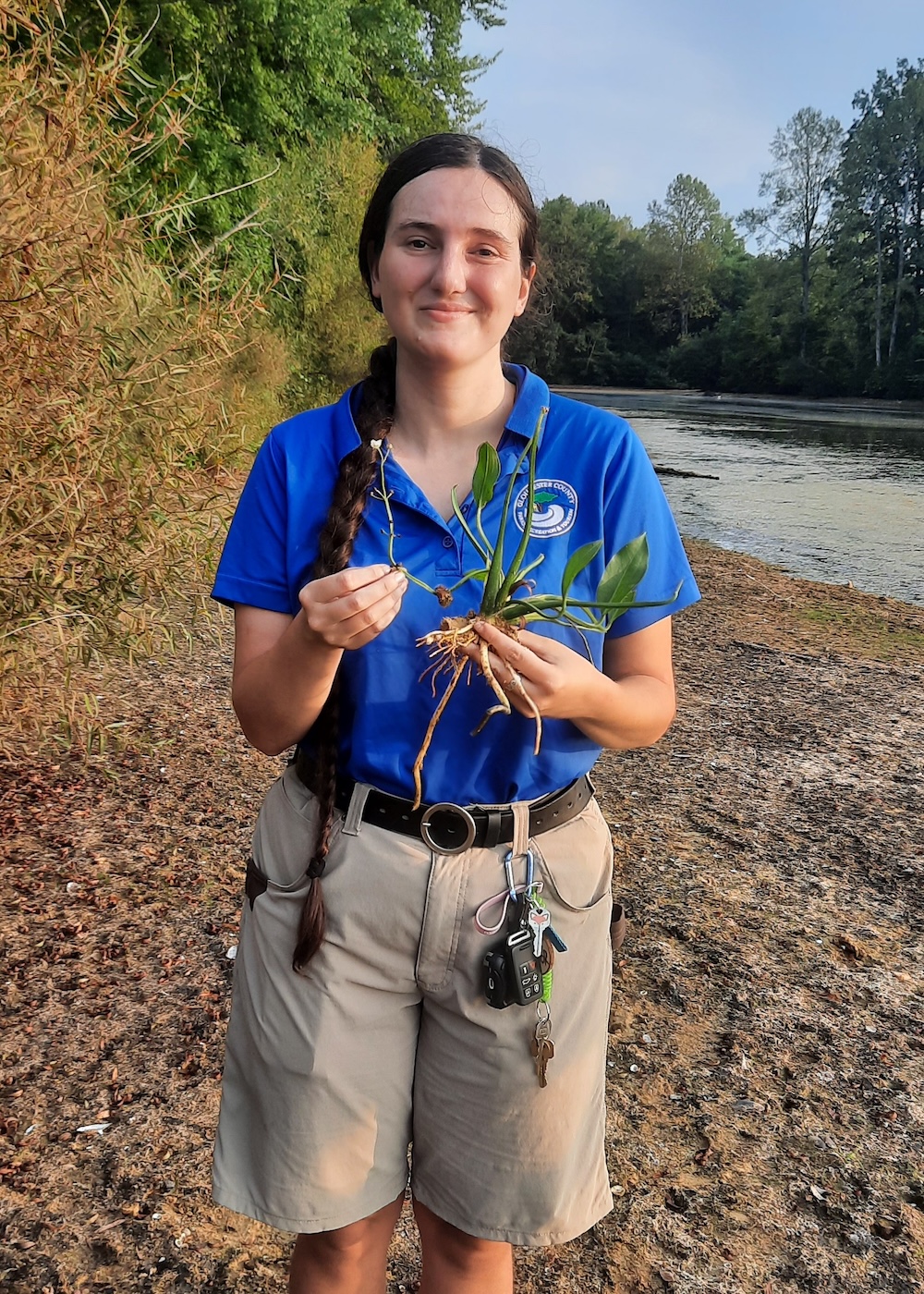
Monica Canepa, a trainee in the current Middle Peninsula Chapter Basic Training class and a ranger at Gloucester County’s Beaverdam Reservoir Park, made an exciting discovery. An avid botanist, Monica documented plants revealed at the water’s edge due to the drawdown effects of the ongoing drought. She noted a plant she didn’t recognize while collecting observations for the Gloucester County Parks for Pollinators bioblitz. When the plant started a buzz on iNaturalist, she knew she had found something very special.
The plant, sessile-fruited arrowhead, Sagittaria rigida, is a freshwater aquatic plant native to ten counties in the mountains and northern regions of Virginia. Finding an example of a mountain disjunct species in a coastal reservoir was a real surprise. Monica contacted her mentor, and soon other Master Naturalists, as well as representatives from the Virginia Institute of Marine Science and the Virginia Department of Conservation and Recreation (DCR), were on the scene to establish a positive identification of the plant and locate examples of the plant across Beaverdam Reservoir.
To date, the species has been observed at over 300 locations along the mainstem of the reservoir. Preserved specimens were provided to the College of William and Mary herbarium. Vouchering the specimens begins the process of vetting this amazing find for inclusion in the Flora of Virginia. Specimens have also been provided to the University of Richmond herbarium as well as the DCR herbarium.
Monica appreciates that her efforts to document the plant are adding to understanding its unique habitat requirements and conservation needs. She notes:
“Discovering Sagittaria rigida has not just been thrilling and validating, it also generated a state-wide team effort to learn about this rare drawdown associated species, connecting me to incredible resources and new friends.”
Additional information appeared in the local Gloucester paper at https://www.gazettejournal.net/rare-plant-discovered-by-ranger-at-beaverdam-park/
James River Master Naturalists Share Their Acorn Collecting Tips
Contributed by Bruce Behringer, VMN James River Chapter
Collecting acorns and other nuts for the Virginia Department of Forestry is a popular annual service project. In 2026, the James River Master Naturalist chapter aimed to deepen the impact of acorn collecting. Through planning and creativity, they quadrupled their acorn contribution, involved more volunteers, and engaged the public.
Outcomes were improved by nearly all measures!
| Measure | 2025 | 2026 |
|---|---|---|
| Chapter members participating | 9 | 10 |
| Number of counties collections were made | 9 | 10 |
| Number of tree species collected | 13 | 13 |
| Outreach/Education contacts | none made | 230 |
| Pounds of seed collected | 222 | 855 |
The chapter identified some changes that led to these results.
- They formed active partnerships with famers markets and libraries. They held outreach events at these locations and helped organize collection bins there.
- They were more prepared! In advance, project leaders recruited additional talented chapter members to the project team. Leaders held a preparatory “ideas call” with other VMN chapters involved in acorn collection. They organized a continuing education seminar by Ellen Powell, VDOF Conservation Education Coordinator, as part of a chapter meeting. In addition, they created an attractive display booth with educational and collection recruitment materials including handout with QR code to link with the VDOF tree identification sheet.
- The VDOF also played a more active role. Press releases came out earlier and residents of the region saw TV announcements. A helpful VDOF representative picked up the chapter’s seed contributions.
Banshee Reeks Master Naturalist Paul Kreingold Earns Loudoun History Award
On November 1, Paul Kreingold (VMN Banshee Reeks Chapter) received a 2026 Loudoun History award. The award was “in recognition of his exceptional contributions to researching, documenting, and interpreting the history of Potomac Marble and its importance to Loudoun County and the nation”.
From the Town of Leesburg:
“Through his book Potomac Marble: The History of the Search for the Ideal Stone, extensive public lectures, field expeditions, and ongoing historical research, he has brought greater public awareness to Loudoun County’s geological and historical significance while engaging audiences throughout the region.”
Paul has presented to VMN volunteers, sharing his interpretation of how American history and natural resources are tied together. You can get a taste of his engaging and informative teaching from his award acceptance speech.

ARMN volunteer Terri McPalmer Partners with Soldiers2Scientists
Contributed by Liz Abbott-Beaumont, VMN Arlington Regional Chapter
Arlington Regional Master Naturalists (ARMN) is proud to recognize Terri McPalmer for her partnership with Soldiers2Scientists (S2S). S2S is a nonprofit organization that connects active-duty military members, veterans, and their families with outdoor citizen science opportunities. Through this partnership, ARMN volunteers help participants explore the natural world, build scientific observation skills, and develop a deeper appreciation for the environment.
City Nature Challenge with S2S
In May 2026, ARMN volunteers joined S2S families at Manassas National Battlefield Park for the City Nature Challenge. This event is an annual four-day global bioblitz that encourages people to document biodiversity in their communities. It was part of an eight-module field experience designed to introduce military-affiliated youth to citizen science and field research methods.
Terri McPalmer was one of the expert Master Naturalists leading the youth groups and helping manage the scavenger hunts with participants looking for reptiles, fish, and other species. Other ARMN volunteers supported participants as they explored the woods, learned to use nature identification tools such as iNaturalist and Seek, and practiced observing and documenting plants, animals, and fungi. They also shared their naturalist knowledge while helping participants explore safely and responsibly.
The experience offered young participants hands-on opportunities to develop essential field skills. They learned to identify promising habitats, look for wildlife beneath logs, and carefully return natural materials to their original positions to protect the ecosystem. Along the way, participants encountered frogs, salamanders, snakes, insects, fungi, migrating warblers, and spring wildflowers. These discoveries demonstrated how much biodiversity can be found by slowing down, looking closely, and asking questions.
The group’s observations made a measurable contribution to community science. Soldiers2Scientists participants documented more than 166 observations representing 95 distinct species during the City Nature Challenge outing. Just as importantly, the experience created opportunities for curiosity, confidence, and shared discovery. As S2S Executive Director Mike Cohn reflected in the blog post:
“Watching curiosity turn into confidence is what this program is all about.”
ARMN thanks Terri McPalmer for her work with S2S and her continued stewardship for bringing outdoor enthusiasts together, especially in youth focused initiatives. Her work with S2S reflects the value of community partnerships in making nature education accessible and helping people of all ages connect with the outdoors. We are grateful for volunteers who share their knowledge, encourage the next generation of citizen scientists, and help build a stronger conservation community.
Future S2S Opportunities
If you’re interested in getting involved with any of these future S2S and ARMN initiatives, please reach out to Terri McPalmer to learn more:
- November 13th: Help put up predator guards on kestrel boxes
- Putting up trail cams to watch coyotes
- Spring TBD: Youth event bird or salamander walk
- Helping other Master Naturalist chapters with owl banding
- Vernal pool mapping with other Master Naturalist chapters
For more on how another chapter (Central Rappahannock Master Naturalists) is working with Soldiers2Scientists, check out the Power of Partnerships article from Summer 2026.
Celebrating Collaboration at Fairy Stone State Park
Contributed by Jess Seaver, Volunteer Coordinator at Fairystone State Park and Southwestern Piedmont Master Naturalist volunteer
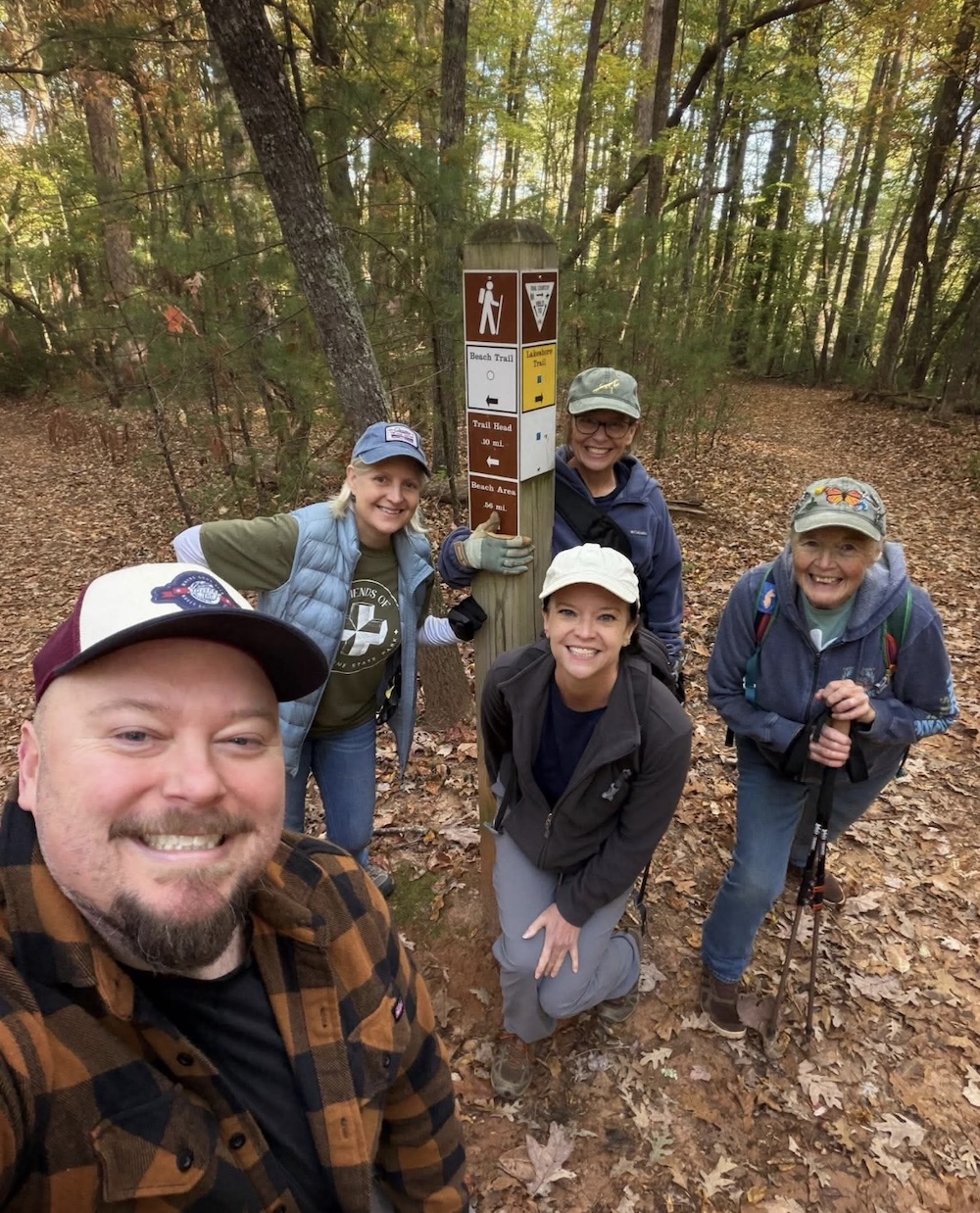
The partnership between the Southwestern Piedmont Chapter, Fairy Stone State Park, and the nonprofit Friends of Fairy Stone State Park continues to grow, strengthening both conservation efforts and community engagement within the park.
Earlier this year, the chapter’s Stewardship Committee officially adopted the Lakeshore Trail through the park’s Adopt‑A‑Trail program. Since adopting the trail, chapter members have committed to monthly workdays focused on routine maintenance and improvement. Their consistent efforts help ensure that the well‑loved trail remains safe and enjoyable for all visitors.
In addition to trail work, chapter members have become essential contributors to the park’s interpretive programs. They have led a variety of educational programs, most notably the popular Insect Discovery Nights, which spotlight the park’s rich nocturnal insect biodiversity. These programs not only engage visitors of all ages but also generate valuable natural resource data. Observations collected through iNaturalist during Insect Discovery Nights and BioBlitz events at the park are compiled into species inventory data used by DCR natural resource staff to inform conservation planning and management.
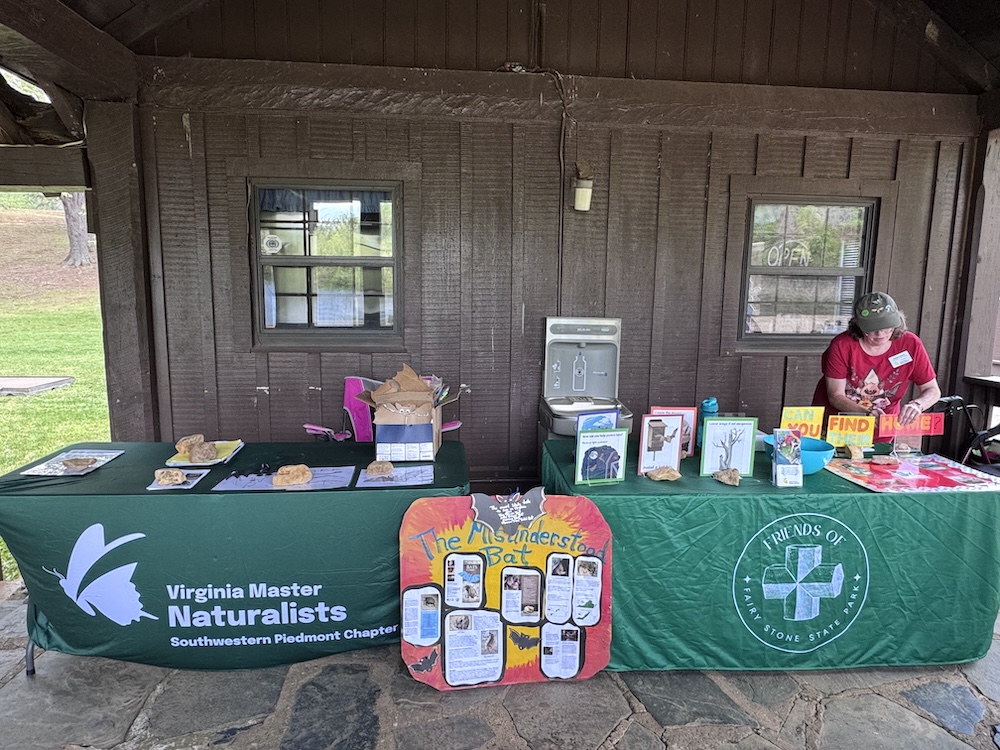
The chapter’s involvement in BioBlitz events has further strengthened the park’s citizen‑science efforts. Members assist participants, help document species across diverse habitats, and support the growing biological inventory of the park.
Chapter members remain an essential part of the Fairy Stone State Park volunteer team. Their dedication, expertise, and enthusiasm continue to elevate the park’s stewardship work, scientific understanding, and visitor experience. The park and its Friends group are deeply grateful for the chapter’s ongoing commitment to this treasured landscape.
New River Valley Master Naturalists Get Creative for Bear Education
Contributed by Judy McCord, VMN New River Valley Chapter
New River Valley Master Naturalist volunteers have found some inventive ways to teach children about Living With Black Bears. Other chapters’ bear education teams might be inspired to try them!
For school age children, we do a shortened presentation, hitting the high points of the presentation with the kids. We then play a modified version of How Many Bears Can Live in the Forest, from Project Wild. The modification is an extra piece of “food” which has a high calorie count but is not good for bears. The bear who finds this piece usually has enough calories to survive but has come into possible conflict with humans. The addendum to the game will be a permanent part of the Project Wild Activity.
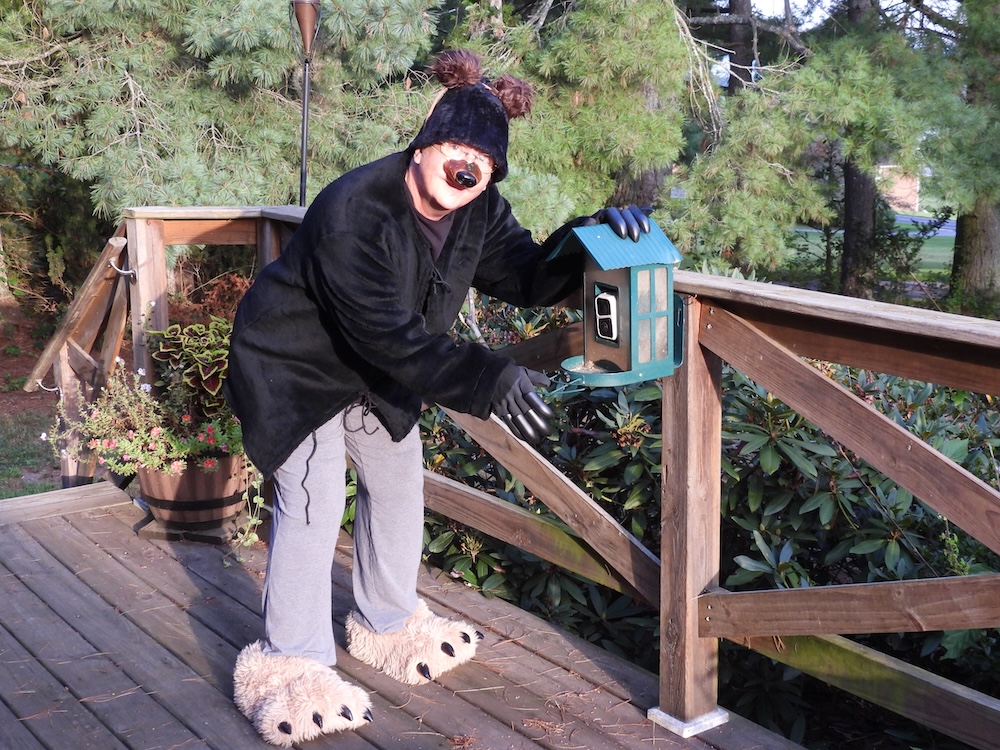
For younger children with short attention spans, we will “Build A Black Bear”. Inspired by a Build a Beaver program we learned at a DCR workshop, we put together a bear costume and will dress up a teacher. Each adaptation added to the costume prompts a short discussion of how bears use these adaptations to get into, or out of trouble with humans. The big claws are used to rip apart logs in search of grubs but may also be used to open trash cans and car doors, etc. The coat was handmade by one of our volunteers and we are very excited to teach with it!
Alice Kopinitz Receives the Nancy Norton Spirit Award
Contributed by Judy Jones, VMN Historic Rivers Chapter
About the Nancy Norton Spirit Award
The Nancy Norton Spirit Award honors volunteers who exemplify the qualities that Nancy Norton brought to the Historic Rivers Chapter. Nancy became a Virginia Master Naturalist volunteer in 2008 and devoted countless hours to serving her community. She was known for her enthusiasm as an educator and steward of the environment, as well as for her passion for helping others understand, appreciate, and nurture the habitats around them. The award recognizes volunteers who reflect that same spirit of service, commitment, leadership, and dedication to the Virginia Master Naturalist mission.
The Historic Rivers Chapter is proud to recognize Alice Kopinitz as the recipient of the 2026 Nancy Norton Spirit Award.
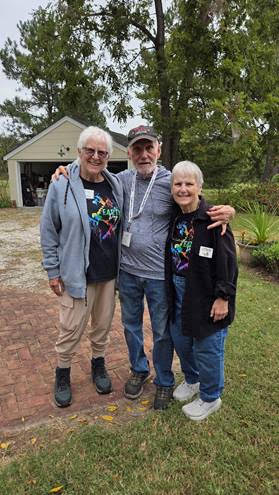
Alice Kopinitz – 2026 Awardee
A Cohort 1 member who has been involved with the chapter since its earliest days, Alice continues to be an active and dedicated volunteer and leader. Her commitment to the program mission is reflected in more than 3,000 hours of volunteer service across nearly 40 different projects.
Among her many projects are wildlife mapping, butterfly counts, trail stewardship at Bassett Trace, bluebird monitoring, and Project FeederWatch. Alice has also provided countless hours of leadership through service on the chapter board, attendance at monthly meetings, support of project leaders, and her enthusiastic involvement in chapter activities, including helping make the annual fall picnic a memorable event.
The Nancy Norton Spirit Award honors volunteers who exemplify the qualities that Nancy brought to the Historic Rivers Chapter: service, enthusiasm, commitment, leadership, and pride in the chapter and its mission. Alice embodies these attributes in every aspect of her work and has inspired fellow volunteers through her dedication and example.
We are proud to congratulate Alice Kopinitz on this well-deserved recognition! We thank her for many years of outstanding service to the chapter and the communities and natural resources we serve.
Three Communities, One Garden: Service Taking Root
Contributed by Anna Dixon, VMN Arlington Regional and Fairfax Chapters

The Project
On Saturday, August 22, three communities came together at Antioch Baptist Church around a deceptively simple objective: transform a roughly 20-by-20-foot shaded area beside the sanctuary into the foundation for a sensory garden featuring native and non-invasive plants. What resulted was far more than a landscaping project. Under the leadership of Kevin-Joseph Tann of Springfield’s Scout Troop 1145, approximately 42 volunteers contributed 6.5 hours of work, representing roughly $10,000 in donated labor. Their effort capped months of planning, coordination, design work, material acquisition and volunteer preparation for Kevin’s Eagle Scout project. Antioch initially publicized the project as an opportunity to benefit its six generations through a perennial and native sensory garden while helping Kevin fulfill the service requirement for the Eagle Scout rank.
The Scouts
The day demonstrated what can happen when three established Springfield District communities bring different strengths to the same piece of ground. For the Scouts, the project was leadership put into practice. Eagle projects are not simply volunteer workdays. The Scout must develop the concept, organize the work, marshal people and materials, and lead others in bringing the project to completion. Troop 1145 has longstanding Springfield roots and a history of Scouts undertaking substantial community-service projects. Kevin’s parents provided the sustained support that makes an undertaking of this scale possible. Kevin carried the responsibility of moving the project from concept to execution.
The Church
For Antioch, the project fits squarely within both ministry and stewardship. Antioch describes itself as a six-generational church, serving people from age two to 102. It emphasizes service that makes an impact both within the church and in the surrounding community. Its Green Ministry has a complementary environmental mission: removing invasive vines, protecting native trees, reducing stormwater impacts, and establishing places where native plants and wildlife can thrive. A sensory garden that can be experienced by children, adults and seniors is therefore more than a beautification project. It advances a broader vision for how the church grounds can serve people while also functioning as healthier habitat.
The Fairfax Master Naturalists
The Fairfax Master Naturalist community also contributed through Virginia Certified Master Naturalist Anna Dixon. Her role remained intentionally supportive throughout the project. Drawing on Master Naturalist training and her work with Antioch’s Green Ministry, she assisted during the planning period and helped connect the garden’s design and plant choices with the broader objective of increasing native vegetation and ecological value on the church campus.
The Results
The pictures capture the progression particularly well. What began as a shaded work area beneath mature trees quickly became an organized garden space. Volunteers removed and prepared soil, installed curved brick pathways, positioned plants, mulched beds and worked in multiple crews simultaneously. By the end of the day, the geometry of the garden was clearly visible. Brick paths divided planted beds while preserving access through the space. Just as important, the images show adults and young people working side by side, not as three separate organizations, but as one collaborative team.
The Impacts
Teamwork may be the project’s most enduring feature. The Scouts supplied youth leadership and an organized volunteer force. Antioch supplied the place, purpose and community that will use and care for the garden. Master Naturalist principles helped keep the project tied to the larger ecological objective of favoring native plants and responsible stewardship. No one element alone would have produced the same result.
The garden itself will now do something the work crews could not accomplish in a single day: grow. As plants establish, seasons change and the space matures, Antioch’s six generations will have an increasingly rich place to see, touch, smell and experience nature immediately outside the sanctuary. Native plants can also provide food and shelter for pollinators and other wildlife, extending the project’s benefit beyond the people who walk its paths. An Eagle Scout project is necessarily Kevin’s project. But this one also illustrates something larger: when youth leadership, a church committed to service and people trained in environmental stewardship align around a tangible community need, a relatively small patch of ground can become common ground. Forty-two volunteers proved that on Saturday. Now the garden gets to tell the story.
VMN Historic Rivers Chapter Supports James City County’s “ReTree JCC” Initiative
Contributed by Tracy Matthew Melton, VMN Historic Rivers Chapter
The James City County (JCC) government is launching an ambitious effort to plant 10,000 native trees per year for a decade. It will rely on local partners to assist the county in the initiative. Historic Rivers Chapter (HRC) has offered its full support.
Making a Connection
HRC member Marie Robertson first reached out to JCC Supervisor John McGlennon who was championing the initiative. Robertson and Tracy Melton met with Supervisor McGlennon on June 19 to discuss how HRC could help the county successfully implement it. We talked about an educational component, with HRC reaching out through library and other outreach programs to engage with the public on the importance of native trees to our regional environment, how they support biodiversity, improve water and air quality, provide shade and cooler places on hot summer days. We also considered demonstration invasive plant removal and tree planting projects in public spaces. HRC has approximately forty certified tree stewards, twenty who completed the course in the spring.
On August 27, the JCC government hosted a ReTree JCC visioning session for partner organizations. Members Tracy Melton, Linda Morse, Cynthia Ferentinos, Rick Brown, Shirley Devan, Andrea Case, Judy Kinshaw-Ellis, and chapter co-advisor Daniel Brooks of the Department of Forestry (DOF) attended. Case and Kinshaw-Ellis are members of the JCC committee overseeing the project.
Project Kickoff
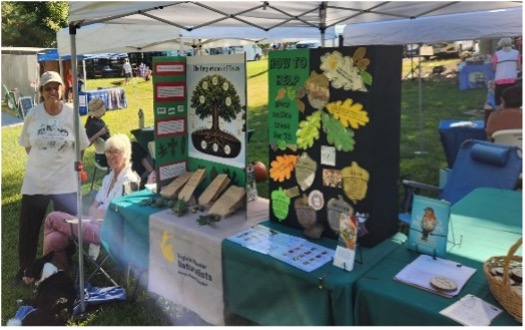
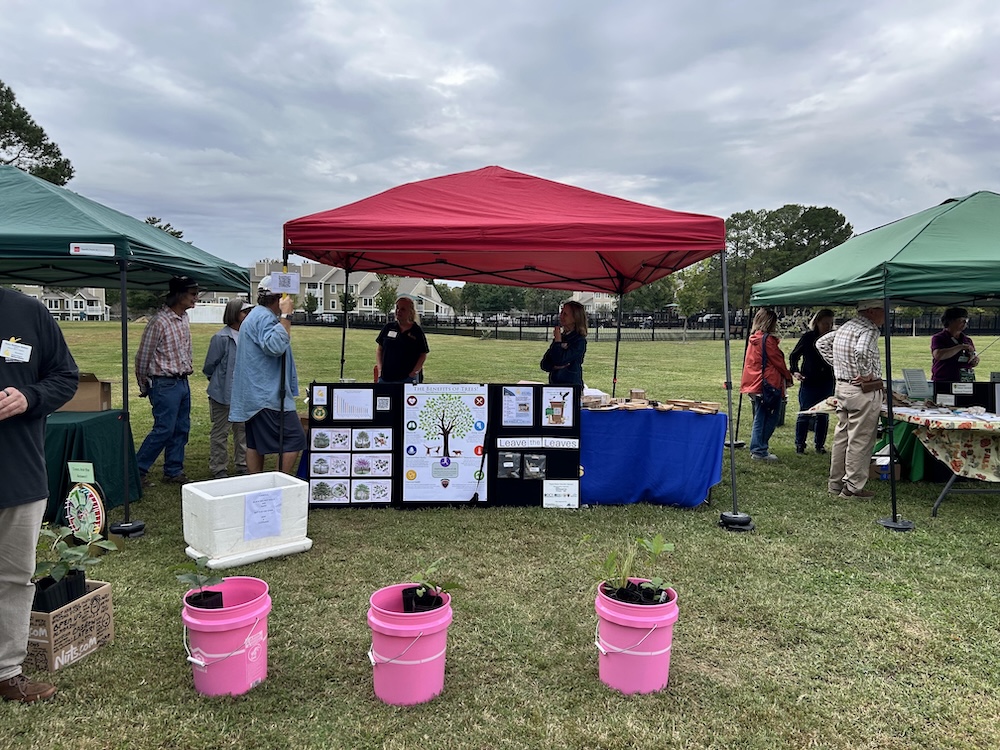
In early October, Linda Morse organized a chapter table at the ReTree JCC kickoff celebration at Veterans Park. The table was located between one hosted by the DOF and one by the JCC Williamsburg Master Gardeners. The HRC trifold featured a DOF graphic on “The Benefits of Trees.” Gail Peterson brought free native tree seedlings to give away. Jim Leech displayed wood species samples. HRC held a guess the number of black walnut hulls and willow oak acorns contest. We awarded the winners copies of plantvirginianatives.org’s Native Plants for Southeast Virginia.
HRC looks forward to working with JCC on this ambitious and consequential environmental project. It will benefit our natural spaces and provide an exceptional opportunity to engage the public about the importance of native trees.