

Merrimac Farm Master Naturalists Revive a Bluebird Monitoring Trail
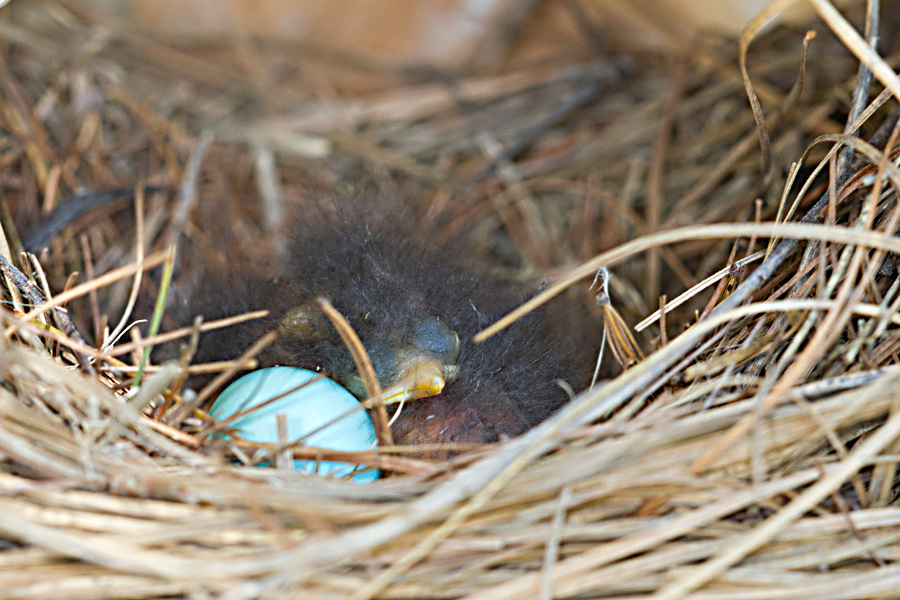
Contributed by Audrey Arnold, VMN Merrimac Farm Chapter
Members of the Merrimac Farm Chapter of the Virginia Master Naturalist program successfully partnered with members of the Virginia Bluebird Society to revive an eastern bluebird monitoring trail in Chestnut Grove Cemetery in Herndon.
The project began when Virginia Bluebird Society member Karen Richmond revived the trail by herself in 2025. That summer, the trail, which had been abandoned for several years, was overrun with invasive house sparrows. Simply removing eggs and nests daily or weekly was not enough.
Through more frequent monitoring, observing bird behavior, trapping invasive house sparrows, relocating “unlucky” boxes under frequent house sparrow occupation, and decreasing the number of boxes, Karen was able to reclaim some of the boxes for bluebirds. Still, reviving the bluebird monitoring trail alone was a challenge and a time commitment.
“By the end of the season I felt defeated by relentless house sparrows and started to think the trail was hopeless! Then one day I was surrounded by 40-50 playful bluebirds as if telling me, ‘Don’t give up! We’re back!’ Then, discovering one box with 4 eggs was all the proof I needed to believe it was working!
I was blessed by a call from Lisa Matthews, Merrimac Farm Chapter of VMN, at the beginning of the 2026 season asking if I’d like volunteers to help with the trail, which I quickly accepted with gratitude. Now we have an amazing team, which frees up more time to catch house sparrows off guard during the week.”
To date, a total of 38 bluebirds have fledged, with the trail entering the third brood of the season with eight eggs (and hopefully more to come).
Tips for Managing House Sparrow Invaders
“To anyone battling similar house sparrow experiences, with a lot of patience and perseverance, you can do it!” said Karen. Here are some of her tips:
- Monitor the boxes as frequently as possible. At one point, she was monitoring a different trail multiple times a day to ward off house sparrows. House sparrows have not been seen on that site since summer 2025.
- Randomly locate boxes under frequent attack by house sparrows.
- Become comfortable with trapping house sparrows or find someone who is to volunteer for your trail.
- Drastically reduce the number of boxes if a trail is overrun by house sparrows. More vacant boxes gives house sparrows ample opportunity to breed. Once bluebirds feel comfortable expanding their territory, you can start adding boxes back.
The Cornell Lab of Ornithology’s Nest Watch program offers some additional tips for reducing house sparrow impacts on nest boxes.