
Addressing the Significant Ecological Threat of the Chinese Parasol Tree
Contributed by Tracy Matthew Melton, VMN Historic Rivers Chapter
A Discovery
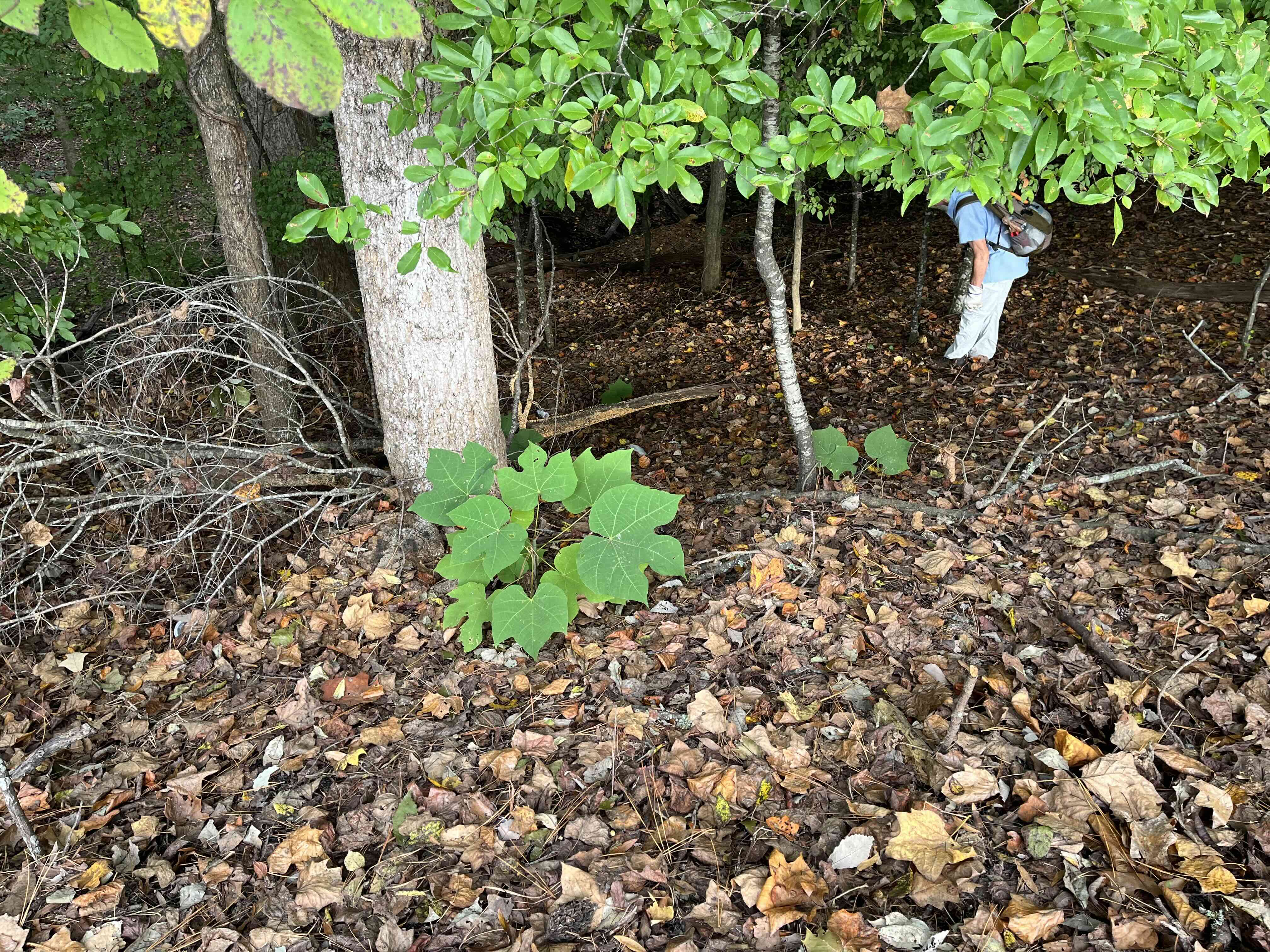
Late in 2024, while removing invasive plants in the College of William & Mary woods, across from Kaplan Arena, Historic Rivers Chapter (HRC) Master Naturalist volunteer Keith Navia noticed an unfamiliar, short plant with enormous leaves. An app identified it as a Chinese parasol tree (Firmiana simplex). Further research confirmed the identification.
The Chinese parasol tree is native to Asia. It has smooth, green trunks; high, parasol-shaped canopies; and large leaves, in various shapes. It grows well in sun and shade and produces massive numbers of seeds.
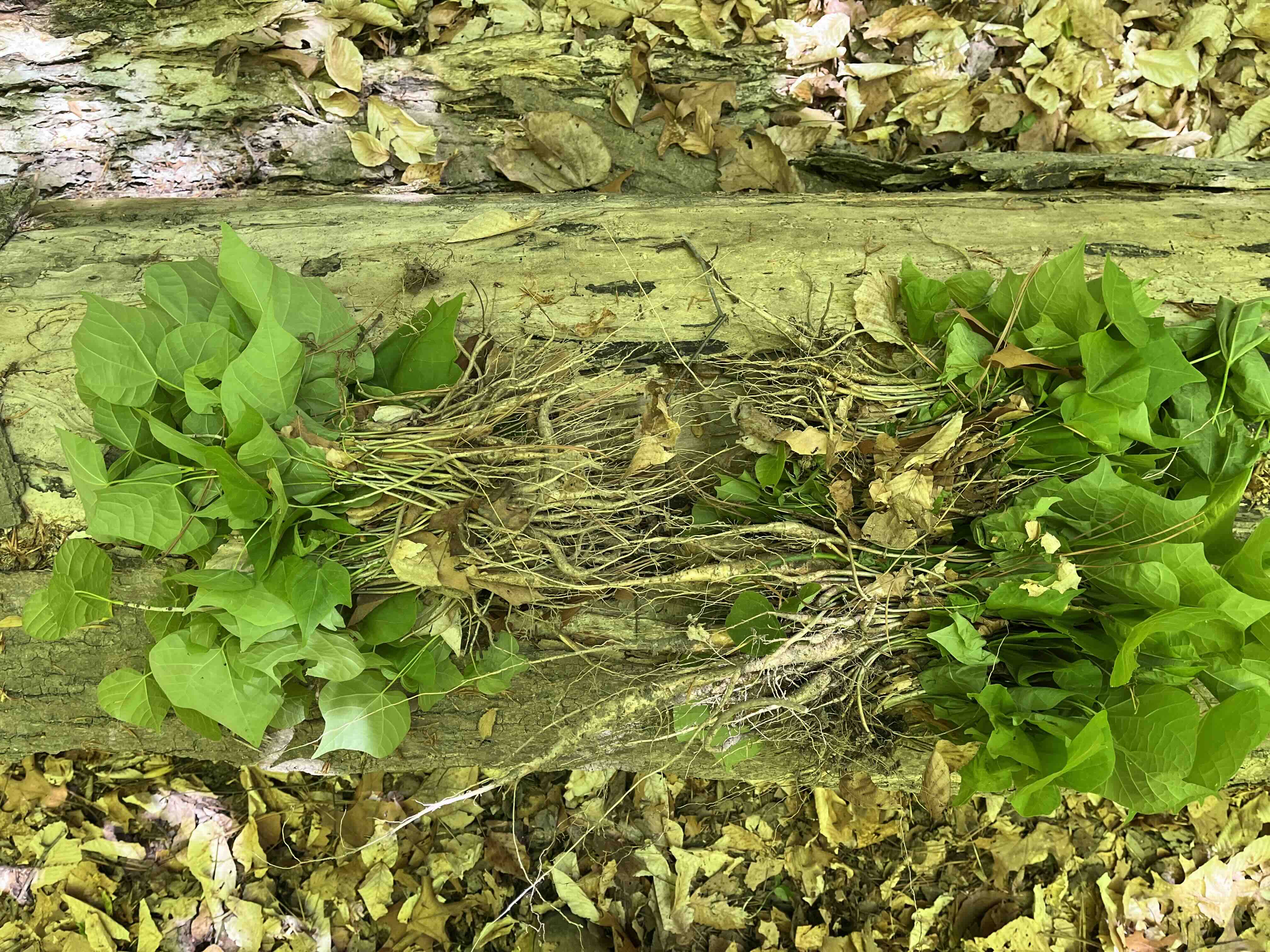
We found more small ones and could pull some cleanly out of the ground, including the entire substantial, yam-shaped taproot. We found a couple of nearby stands with a few dozen mature parasol trees. Early the following year, Navia and fellow VMN volunteers Linda Morse, Jennifer Smith, and Tracy Matthew Melton worked with William & Mary CKI, Alpha Phi Omega (APO), and Botany Club student volunteers to remove a substantial number of these parasol trees.
Removing Parasol Trees and Stopping the Spread
Over the last year, we have worked to remove regrowth on stumps and hack them up to prevent further growth and to remove remaining trees. This March and April, we have followed up, policing the area for regrowth and seedlings. The numbers are staggering. We have removed more than 2700 parasol trees and seedlings, more than 1700 this March and April alone, over just a couple of acres of otherwise ecologically healthy woods. Almost all of these were small seedlings, and the entire roots have been pulled out of the ground.
The Chinese parasol tree is not currently listed as an invasive plant in Virginia (see the DCR invasive plant list online). The rapid spread that we found in these woods clearly demonstrates its potential to negatively impact our landscape. We were able to pull up small ones, including the entire taproot, and to pry up even moderate ones with a shovel. Regrowth happens but is not robust, especially if the bark is hacked off the stumps. Any infestation, though, should be addressed as promptly as possible.
Next Steps
We shared these observations with the Virginia Department of Conservation and Recreation’s invasive species team and with the Blue Ridge PRISM. As a result, Chinese parasol tree is now on the Blue Ridge PRISM’s list of Early Detection – Rapid Response (EDRR) species for their Conservation Scouts project. Conservation Scouts report observations of any EDRR species on the list to iNaturalist.