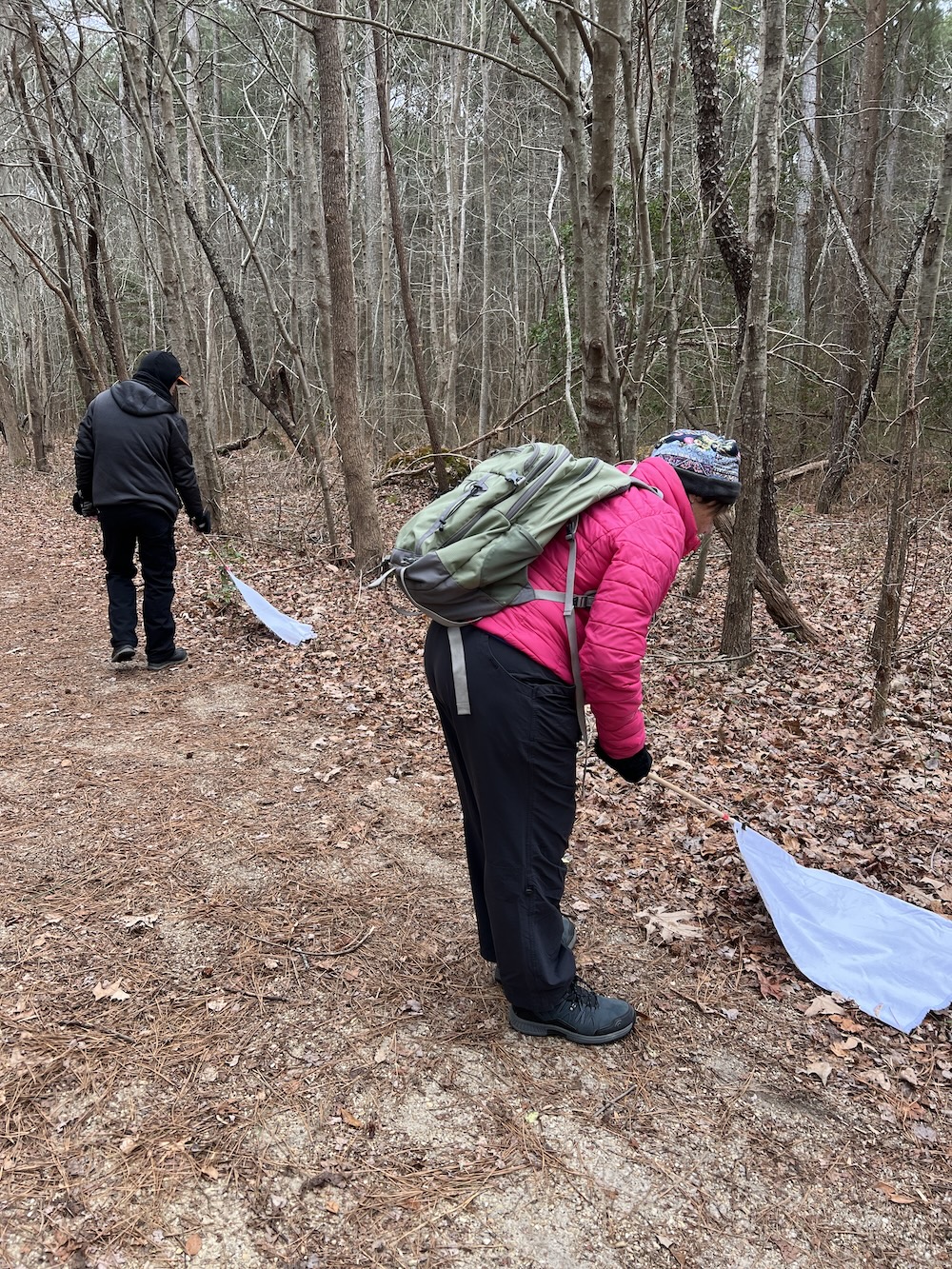

VMN volunteers help increase understanding of ticks and tick-borne diseases
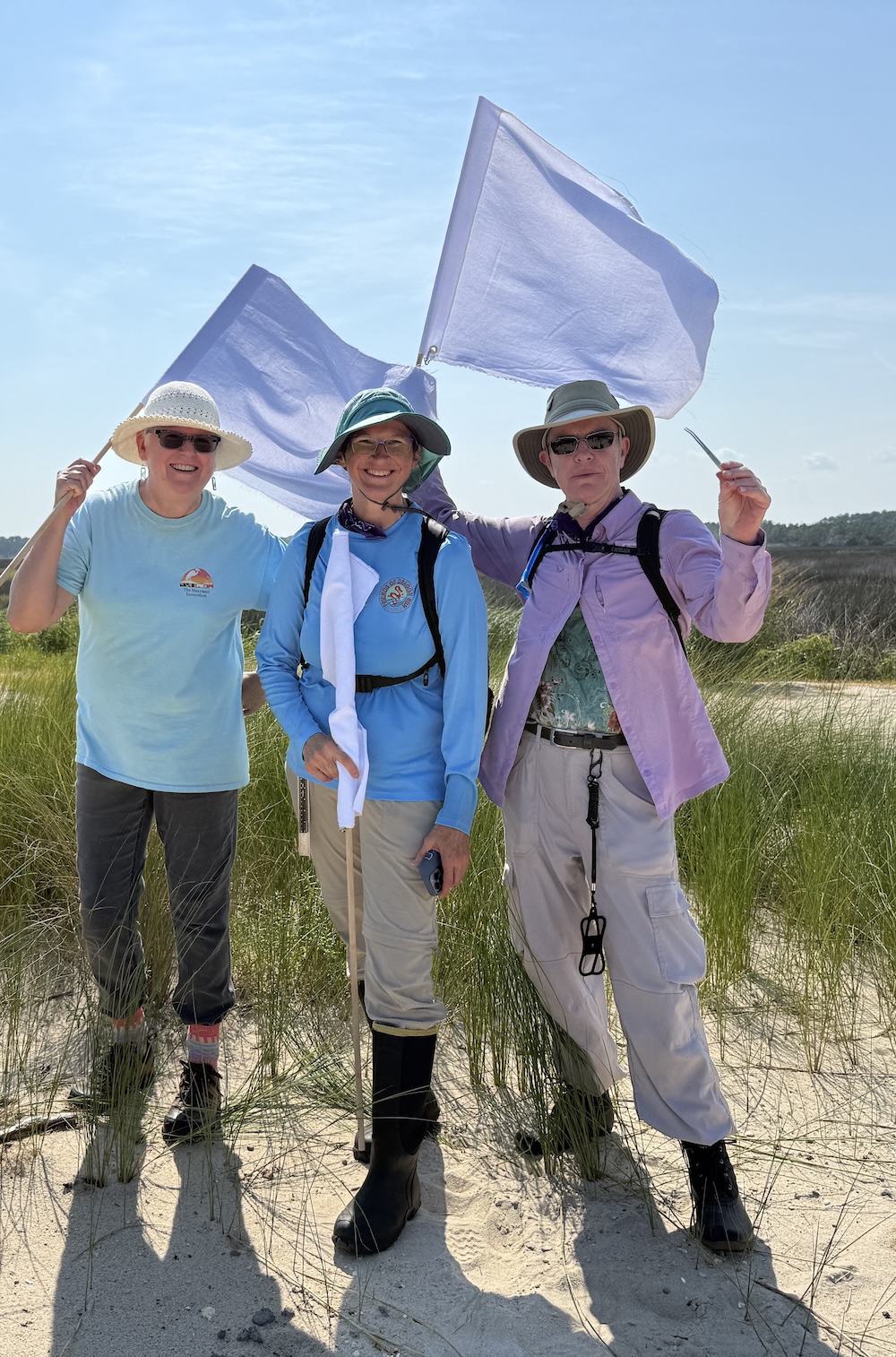
By Dr. Holly Gaff, Old Dominion University Tick Research Team
I wanted to give a shout out to three Virginia Master Naturalist groups that have been helping with my research for the past couple of years.
The Old Dominion University Tick Research Team has been conducting long term surveillance in southeastern Virginia and surrounding area since 2009. We have collected more than 300,000 ticks to date in an effort to better understand the variation in tick populations across theregion and year-to-year.
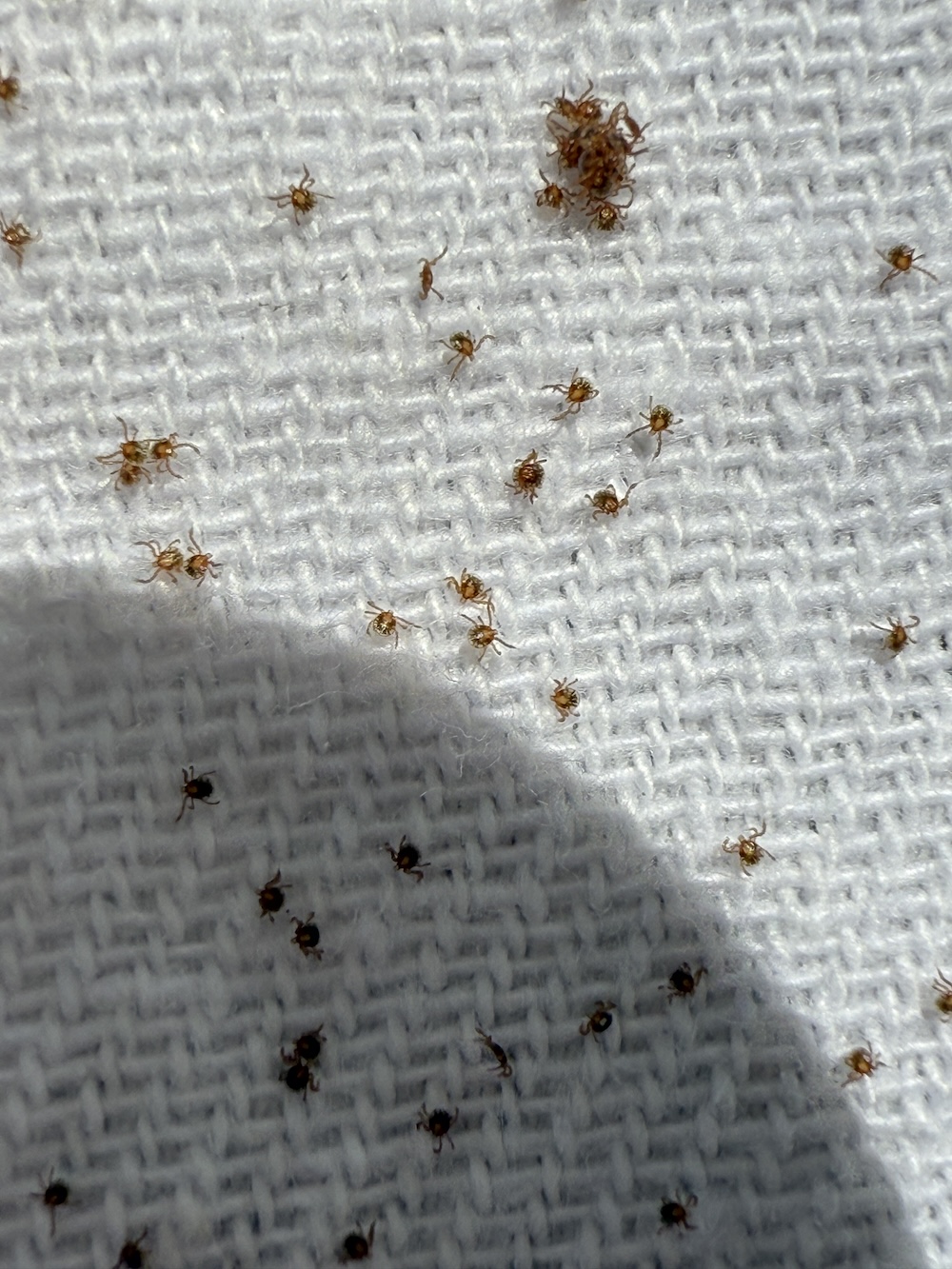
Tick-borne diseases have been on the rise across Virginia, the United States, and around the world. In order to inform public health entities and the general public about the risks, there is a lot of information that is lacking. There is currently very little long-term tick surveillance outside of the northeast, which has left us with little understanding of how to help reduce risk of tick encounter. In our surveillance efforts, we have mapped the range expansion of two tick species moving across our region up from the south. We are also tracking the expansion of a variant of the blacklegged tick coming from the north that is increasing the chances for Lyme disease. One of the biggest limitations to the work of the ODU Tick Research Team is the time and costs of getting to field sites. During the summer, we travel extensively across Virginiaand surrounding states, but during the school year, we are limited to sites near campus.
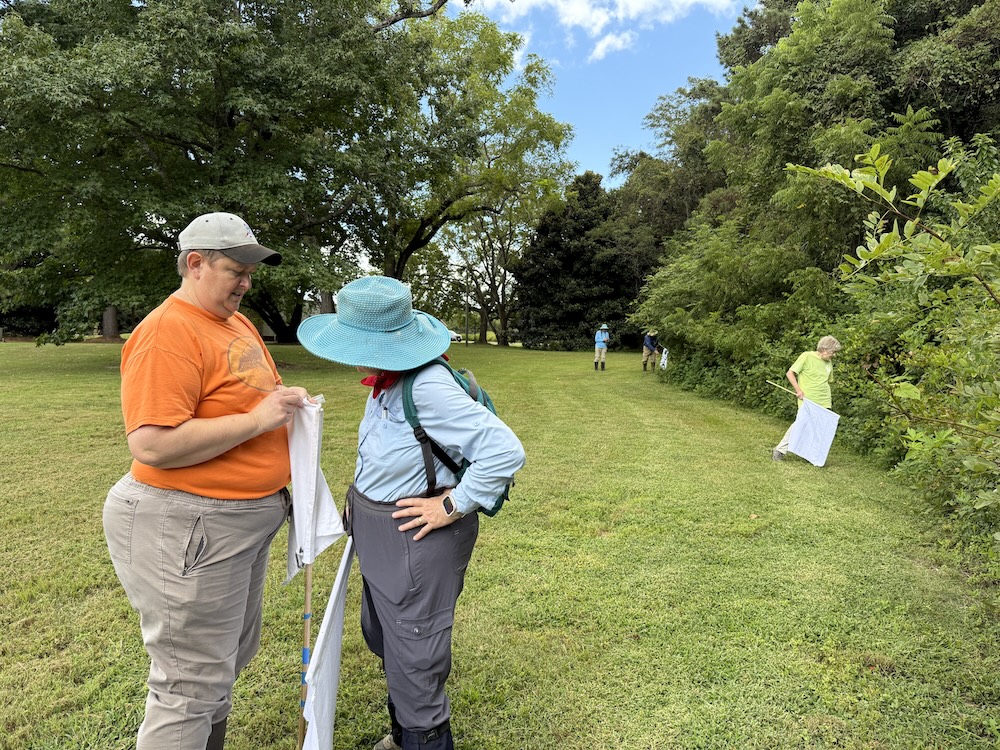
In an effort to help fill this gap, three Virginia Master Naturalist groups have stepped up to help with the monthly tick surveillance that will give us a much better picture of tick activity across Virginia. In 2023, we started working with Kellie Piekarsky and the Eastern Shore Master Naturalists to assist with collecting ticks at Mutton Hunk Fen Natural Area Preserve. In 2025, V. Ross Johnson led the charge to bring the Middle Peninsula and Northern Neck Master Naturalist groups in to assist with tick collections in those regions. After training from the ODU Tick Team in person, these groups have continued the work collecting ticks from the environment along set transects as well as collecting ticks from themselves. These ticks have been delivered to ODU, and we are currently working to process them.
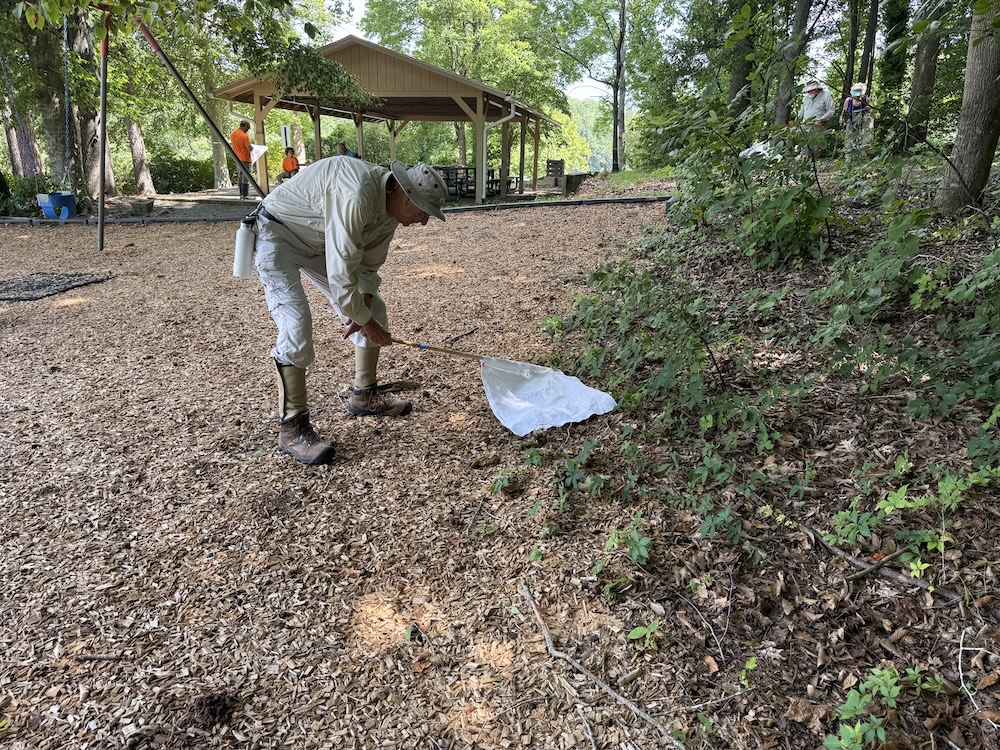
There is no possible way that we would be able to get these data without the assistance of these groups. I am personally so grateful for their assistance.
So far, the Master Naturalist groups have collected a combined 908 ticks from nine sites that we would not have been able to get to without their support. If there are any other Master Naturalists that would like to participate individually or as the entire Chapter, we would welcome them! I would be happy to meet with and train anyone how to formally collect ticks, which is very easy to do! We would also welcome ticks from people or their animals. We have so little consistent data from across Virginia with so many threats to human and animal health!
My research has benefited greatly from the incredible assistance that I have received from these brave initial chapters of the Virginia Master Naturalists! I hope to see more chapters get involved in the years to come.
Editor’s note: We have created a template for the ODU tick surveillance activity in Better Impact. VMN volunteers interested in doing this activity should contact their chapter leaders to request approval of the activity.