

From Our Sponsors and Partners – Winter 2026
Two new natural area preserves, one expansion
By Emi Endo, Virginia Department of Conservation and Recreation
Virginia has added two new natural area preserves to the statewide system and nearly doubled the size of Buffalo Mountain Natural Area Preserve.
New: Eastern Divide Natural Area Preserve
The state’s 68th natural area preserve, intended to protect one of the most at-risk cave-adapted species in Virginia, has been created in Montgomery County. Eastern Divide is just under 23 acres and located in a developing region outside of Blacksburg.
New: Brocks Gap Natural Area Preserve
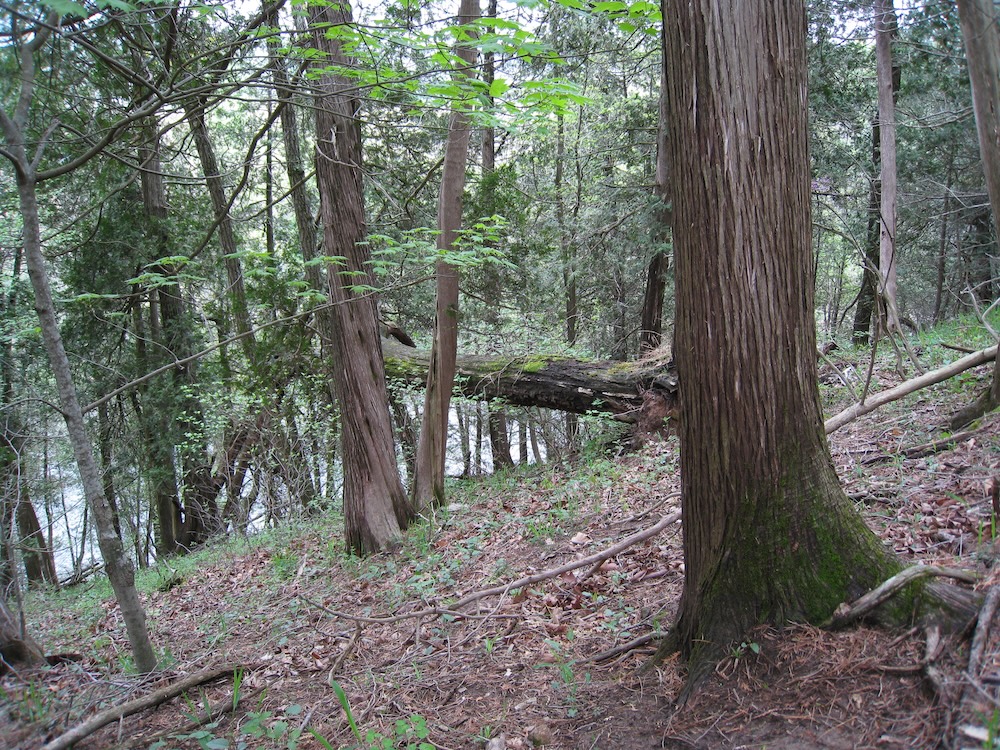
Located west of Broadway in Rockingham County, the 214.8-acre Brocks Gap Natural Area Preserve features Virginia’s largest remaining example of a globally rare forest.
The 69th natural area preserve includes a mature stand of northern white cedar trees along the North Fork of the Shenandoah River.
Expanded: Buffalo Mountain Natural Area Preserve
The popular Buffalo Mountain Natural Area Preserve in Floyd County has been expanded by 975 acres, further protecting habitat for 18 rare species that make their home in its forests, wetlands and grasslands. Through a partnership with The Conservation Fund, DCR has acquired land surrounding the three sides of the existing preserve, bringing the total acreage to 2,121.
Updated Statewide Land Use/Land Cover Data Now Available
From the Virginia Department of Environmental Quality
Planners across Virginia now have access to newly updated, high-resolution statewide land use data. This enhanced dataset is the result of a collaborative effort between DEQ, the Virginia Department of Conservation and Recreation, the U.S. Environmental Protection Agency, the Chesapeake Conservancy, University of Vermont’s Spatial Analysis Laboratory, and the Hampton Roads Planning District Commission. The Land Use/Land Cover dataset includes 56 distinct land use categories at a 1-meter resolution, derived from 2021 imagery. This update improves the ability of state and local governments in a variety of ways including addressing and improving water quality. The data is hosted by the Virginia Geographic Information Network, providing reliable and centralized access for users across the Commonwealth.
Sign up to receive Data & Analytics updates from DEQ if you would like to be the first to know about new and updated tools.
DEQ Launches Innovative Mitigation and Nutrient Credit Trading Platform
The Virginia Department of Environmental Quality (DEQ) is partnering with Water Ledger to release the first-of-its-kind digital compensatory mitigation and nutrient credit marketplace. The Stream, Wetland, and Nutrient (SWaN) credit trading platform increases transparency, making it easier for permittees to purchase credits and for bankers to sell them. SWaN was developed and will be operated by Water Ledger, which received funding from DEQ through a competitive process.
Wetlands protect water quality by serving as natural filters, capturing pollutants and reducing flooding. Under Virginia’s “no net loss” policy for wetlands and streams, all new construction that removes a wetland or stream in the Commonwealth must replace it within the same watershed. This is often done through mitigation banks, which create new wetlands and restore streams, generating credits. DEQ’s existing nutrient credit trading program, which offers regional solutions for storm water quality requirements, will also be available on the platform. Purchasing credits from existing banks through SWaN provides immediate, established credits. Once banks are completed, they are placed into perpetual conservation and are unable to be developed in the future. This allows for a long-lasting environmental benefit for all who live in the watershed.
“When credits aren’t readily available or information is not up-to-date, projects are delayed and environmental outcomes suffer,” says DEQ Director Mike Rolband. “SWaN modernizes Virginia’s mitigation and nutrient credit marketplace by bringing transparency, consistency, and efficiency to a system that has long needed it, ultimately improving environmental outcomes and predictability for permittees.”
SWaN improves upon the current U.S. Army Corps of Engineers tracking system, which lists wetland, stream, and nutrient credit banks, but does not report pricing, serial codes for individual credits, or transactions, and may report delayed information about credit availability. SWaN provides real-time visibility into credit availability and pricing, and allows transactions to occur directly within the platform. This clarity helps reduce uncertainty in the mitigation and nutrient markets, supports more timely offset of environmental impacts, and encourages the use of already established banks rather than delayed alternatives.
The impact of a smoothly functioning marketplace has drastic benefits, such as:
- More timely and ecologically successful offset of environmental impacts
- Less fluctuation in credit prices
- More public transparency in how credits are being provided
By offering a digital marketplace where credit offers can be browsed, compared, and purchased, SWaN will change the landscape of mitigation and nutrient banking to favor transparent transactions and demystify the common disconnect between buyers and sellers, while ensuring the longevity and future protection of Virginia’s wetlands and streams. When environmental business becomes easier to conduct, the public reaps the benefits of a well-managed and cared-for ecosystem.
Check out the new SWaN platform here.
Virginia Big Tree Program 2025 Activities and 2026 Preview
By P. Eric Wiseman, PhD, Virginia Big Tree Program Coordinator and Associate Professor of Urban Forestry, Virginia Tech Department of Forest Resources and Environmental Conservation
2025 Outreach and Media Coverage
- The Virginia Big Trees website is our primary tool for public outreach
- In 2025, the website had 26,000 active unique visitors who made 196,000 interactions with the website
- An outdoor lesson on big tree measurements was given to about 110 attendees at the NOVA Urban Forest Roundtable in July
- Virginia Big Trees was highlighted on an episode of WHRO Public Media in December
2025 Big Tree Reports
- In 2025, we received 294 big tree reports from 24 different big tree reporters (volunteers and staff).
- Of those reports, 276 resulted in updates to the big tree register as follows:
- 156 new nominations (trees large enough to rank in the top three living trees for their species)
- 74 recertifications of trees already registered
- 46 deaths of trees already registered
- Among the new nominations above, we have 51 new state champion trees, several of which are contenders for national champion.
- To see the 2025 updates to the big tree register, visit our Advanced Search Tool, select “All active living trees” in the Status Filter, click the “Search” button, and sort the output table by “Last Measured”
- We also have a PDF version of the big tree register that you can view online or download for printing
New Resources to Explore VA Big Trees
- We now have two interactive online maps to explore our national champion and state champion trees. These maps were created by Virginia Tech geography student Katherine Zendek with support from Seth Peery, GIS architect for Virginia Tech
- These maps provide a visualization of the champions’ distribution across the state as well as interactive tools to search, filter, and explore trees. Each map includes a brief tutorial for the tools
- The maps are accessible through the “Browse” feature on the front page of the Virginia Big Trees Website
- Direct link to the national champions map
- Direct link to the state champions map
- Coming soon! A list of most-wanted big trees. This is a list of species with no champions for which we request your nominations. That list will be updated soon on this webpage.
Looking Ahead to 2026
- This year brings the biannual update to the National Register of Champion Trees. Public nominations to the register have now closed. State coordinators such as myself will now be reviewing those public nominations as well as adding new nominations from our state registers
- The 2026 national champion tree register with be published in late fall 2026
- We have about 80 trees across the state that are due for their ten-year recertification this year. I will be reaching out to volunteers in the next month or two for help with these recertifications
Getting Involved with VA Big Trees
- Check out our website for more information about searching, measuring, and nominating big trees
- Contact us by email for volunteer opportunities
Thank Yous and Accolades
- Thank you to the numerous volunteers who expend their time, energy, and personal resources to report big trees to us
- Thank you to our student interns this past year (Bella Hardaway, Helena Azar, Vic Parkes, and Katherine Zendek)
- Thank you to Trees Virginia for financial support of the big tree program
- Thank you to Virginia Tech College of Natural Resources and Environment and Department of Forest Resources and Environmental Conservation for organizational support of the big tree program
- And a special thank you to John Peterson who recently retired after a 30+ year career at Virginia Tech. John developed and maintained the online database and IT infrastructure to make the big trees website possible.